Last updated November 21, 2026
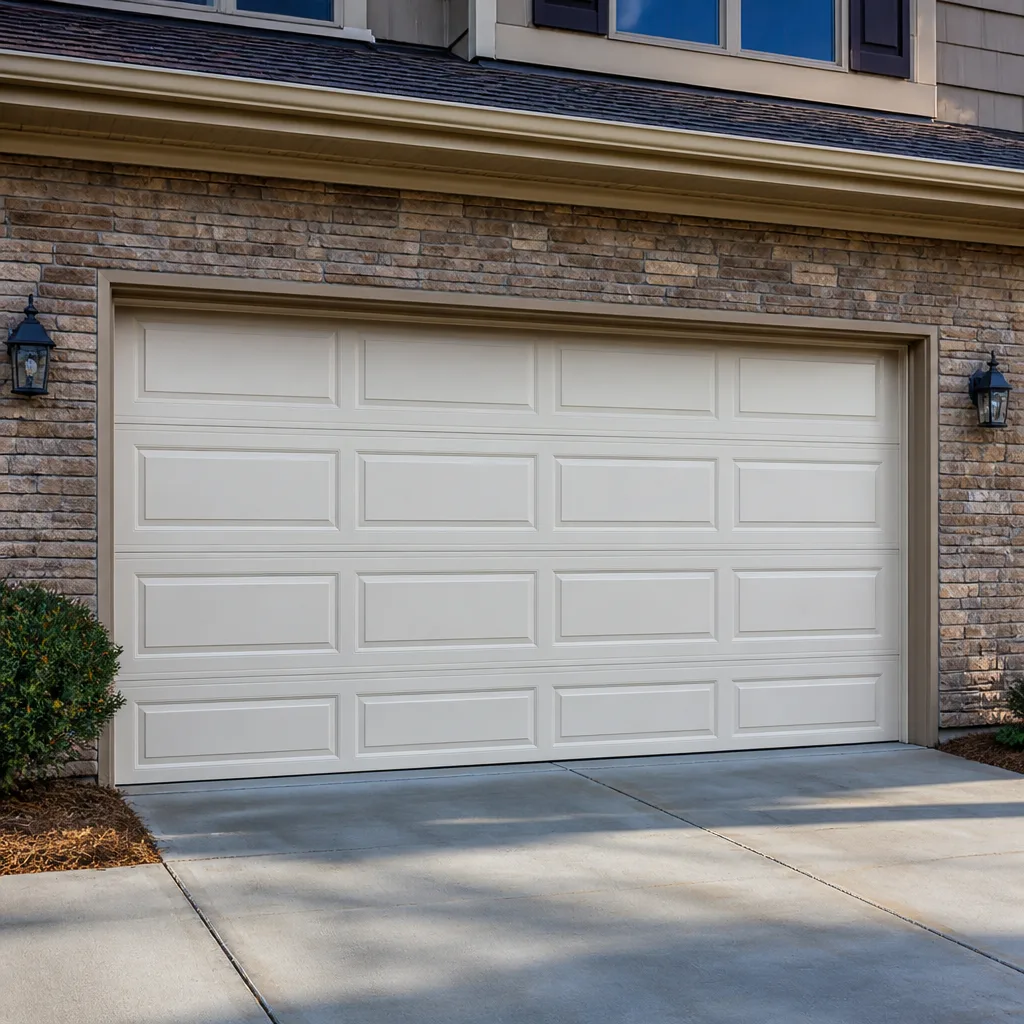 Raised-panel steel
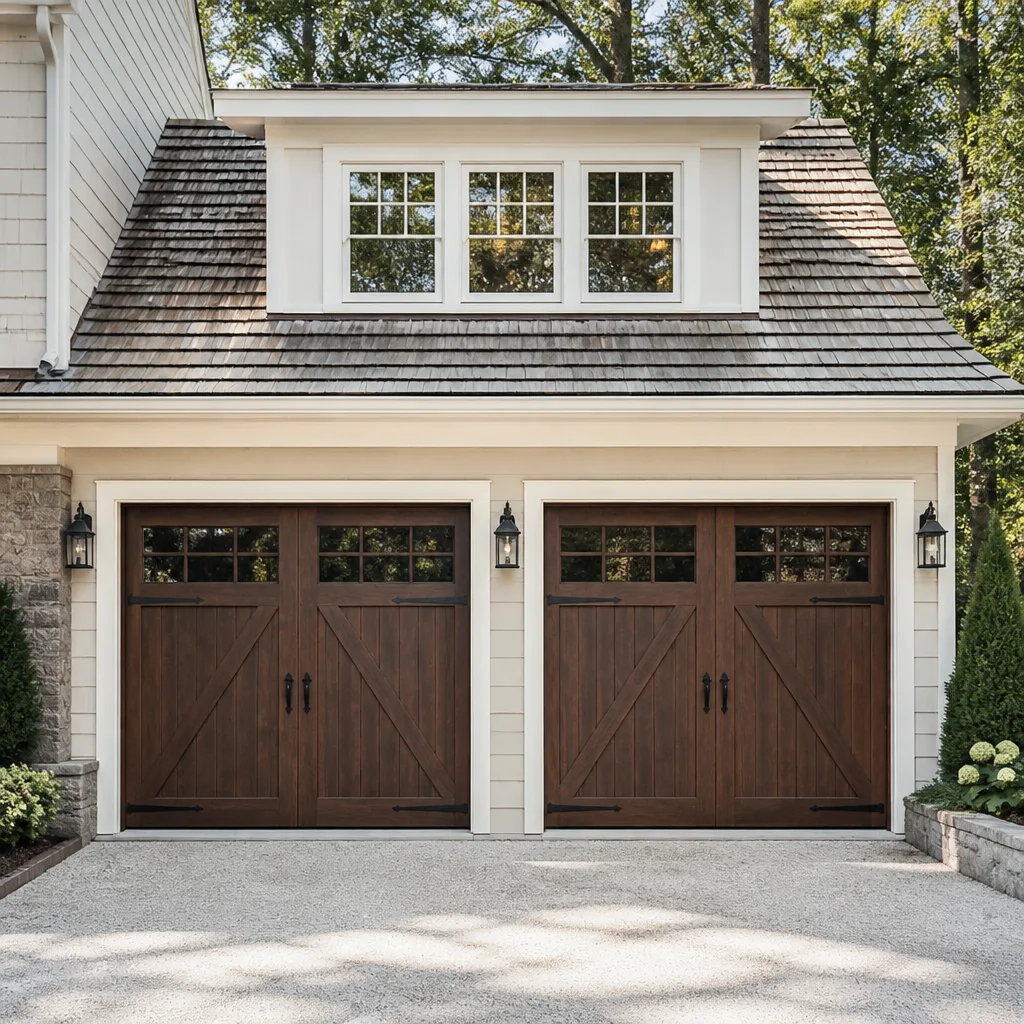 Carriage house
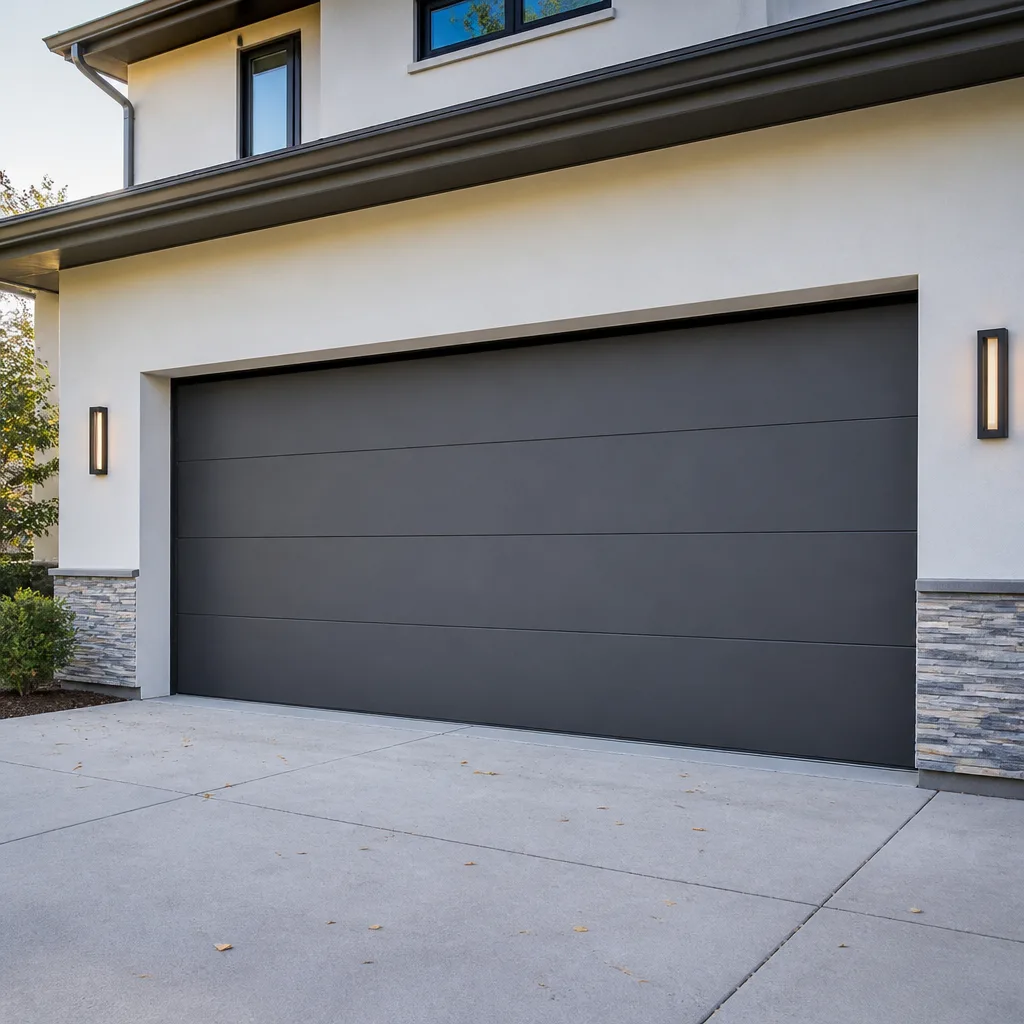 Modern flush
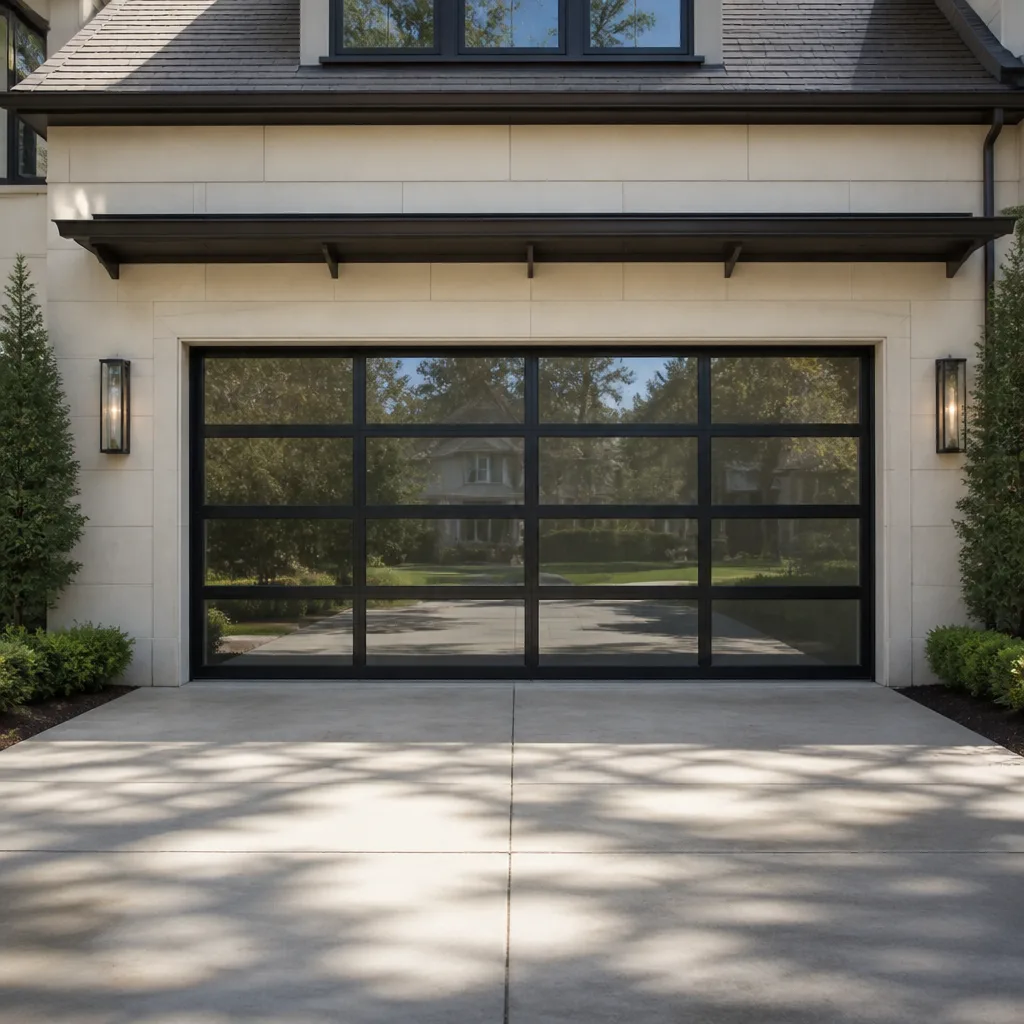 Full-view glass
 LiftMaster openers
 Chamberlain openers
Full 25-point door and opener safety check with every visit - springs, cables, rollers, tracks, and your LiftMaster or Chamberlain opener included
You get a price before we start. It does not change when the pro arrives.
Get your free estimateGarage Door Warning Signs: A Plainfield Homeowner’s Reference Guide
A garage door that’s “a little slow” is not a nuisance problem. It’s often a motor compensating for a mechanical resistance that’s about to exceed what the opener can handle. That slow, labored lift is the door telling you something is binding, and once the resistance wins, the door stops moving entirely. Most warning sign guides hand you a list of symptoms and leave you there. This one connects each symptom to the part that’s failing, tells you whether you have days or minutes, and explains what to do next. If you live in Plainfield and your door is acting up, this is the reference we wish every homeowner had before they called.
Quick Answer
The most urgent garage door warning signs in Plainfield are a snapped torsion spring (a loud pop followed by a door that won’t lift), a door that reverses immediately on closing, and any door that comes down faster than you can step aside. Those three mean stop using the door and call a professional today. Slower signs like grinding, squealing, uneven gaps, or a door that works manually but not with the opener give you a few days to schedule service, but none of them fix themselves. Catching the failure chain early is what keeps a $200 repair from becoming a stranded-car emergency.
Styles & brands we work with
- Raised-panel steel
- Carriage house
- Modern flush
- Full-view glass
- LiftMaster openers
- Chamberlain openers
Table of Contents
- What the Sounds Mean: Grinding, Popping, and Squealing
- Reading the Gaps in a Closed Door
- The 10-Second Reversal Test
- Manual vs. Automatic: What That Difference Tells You
- Three Signs That Mean Stop Using the Door
- Signs That Allow a Few Days to Schedule Service
- Why the Brand on Your Door and Opener Matters
- How Plainfield Weather Works on Your Door
What the Sounds Mean: Grinding, Popping, and Squealing
Sound is the fastest diagnostic tool you have. A garage door is a system of springs, cables, rollers, hinges, and a track, and each part makes a distinct noise when it starts to fail. Learning the difference between grinding, popping, and squealing tells you which component is in trouble and how fast you need to act. Homeowners in Plainfield ask us about door noises more than almost anything else, and the answer is usually specific once we know which sound they’re hearing.
Grinding
Grinding is metal-on-metal wear. It usually comes from dry or seized rollers, a bent track section the rollers are scraping against, or a torsion shaft that has lost its lubrication. Grinding is a slow-decline warning. You have time, but the friction is wearing the parts faster and loading the opener motor. Left alone, grinding rollers can flat-spot and eventually lock, and a bent track can pull the door off its alignment.
Popping
A single loud pop, followed by a door that suddenly won’t lift or drops hard, is the classic sound of a torsion spring breaking. That pop is the tension releasing all at once. After it, the door is dead weight, and no amount of opener button pressing will move it. Popping can also come from a cable jumping its drum or a hinge pulling loose, but a broken spring is the most common cause. Treat a pop as an immediate stop-using-the-door signal, covered in more detail below.
Squealing
Squealing is usually a bearing or roller crying for lubrication, or nylon rollers that have worn through. It’s the least urgent of the three, but it points to parts that will fail sooner if ignored. A door that squeals on every cycle is telling you its moving parts need attention, whether that’s lubrication, a roller swap, or a hinge replacement.
If you’re hearing any of these and can’t tell which one it is, that’s a reasonable time to bring in a specialist. Our garage door repair technicians hear these sounds every week and can usually identify the failing part within a few minutes of inspection.
Reading the Gaps in a Closed Door
A closed garage door should sit evenly against the floor and frame. When it doesn’t, the gap pattern is a map of which side of the hardware is out of balance. Stand inside your garage with the door down and look along the bottom edge, then check each side. Uneven gaps are one of the most overlooked warning signs, and they’re worth checking monthly because they often appear before anything starts making noise.
- Wide gap on one side, tight on the other: The door is out of level. That typically points to a cable that’s stretched or slipped on one side, a broken spring on that side of a two-spring system, or a damaged hinge near the bottom corner.
- Gap along the whole bottom edge: The bottom seal or weather stripping has flattened or pulled loose. Common in older doors, and it lets in drafts, water, and pests. It’s also a sign the door may be sitting slightly high and not sealing.
- Gap at the top corners: The top panel or frame is shifting, often from a loose hinge or a track that’s pulled away from the wall.
- Gap that changes with the season: Wooden doors and wooden frames swell and shrink with humidity. A gap that appears in wet weather and closes in dry weather is usually a seasonal movement, not a failure, but it’s worth watching to make sure it doesn’t become permanent.
An uneven gap is also a security concern. A door that doesn’t seal properly can be pried at the weak corner, and it leaves the interior visible from the street. If you notice a new gap that wasn’t there before, especially on one side, have it looked at before it turns into a track or cable problem.
The 10-Second Reversal Test
Every modern garage door opener has a safety reversal system designed to send the door back up if it meets resistance while closing. Testing it takes about ten seconds and is the single most important safety check a homeowner can do. Here’s how:
- Stand outside the path of the door, with the door fully open.
- Press the button to close the door, then place a roll of paper towels or a piece of 2×4 flat on the ground directly under the center of the door, in the door’s path.
- As the door comes down and contacts the object, it should reverse and return to the open position within a second or two.
- If the door presses down on the object and keeps going, or reverses only after stalling for several seconds, the system is failing.
A door that doesn’t reverse on contact is a serious safety hazard. Children, pets, and vehicles are all at risk when the reversal mechanism fails. The cause is often a misadjusted limit switch, a worn gear, or a sensor problem, and it needs the attention of someone who knows the opener brand. Because opener safety systems are wired into the unit, this is not a homeowner job. Our garage door opener repair technicians test and recalibrate reversal systems on every service call, and if your door fails the 10-second test, call us rather than using the door until it’s checked.
Manual vs. Automatic: What That Difference Tells You
If your door lifts easily by hand but won’t move with the opener, or moves with the opener but feels heavy when you disengage it and try by hand, that difference is a diagnostic clue. It usually splits the problem into two different systems: the door’s mechanical balance versus the opener itself.
Door works by hand, doesn’t work with the opener: The door is probably balanced and the problem is in the opener. That could be a dead motor, a stripped gear, a failed logic board, a remote pairing issue, or a safety sensor that’s misaligned or dirty. If the opener hums but doesn’t pull, the gear or drive is the likely culprit. This is good news in a way, because it isolates the repair to the opener and the door’s springs and track are probably fine.
Door doesn’t work by hand, but the opener tries: This is the more serious scenario. If the door is heavy and hard to lift by hand, the springs are failing or have already failed, and the opener is trying to lift a door that’s too heavy for it. Running the opener against a dead spring can burn out the motor or strip its gears, which turns a spring repair into a spring plus opener repair. Stop using the opener in this case and have the springs checked.
The one exception is when the door is disconnected from the opener and still heavy. That’s normal for an unpowered door. The test only works when the door is fully engaged with its springs and track, which is why we recommend having a technician do the assessment if you’re unsure. A hand test on a door with a broken spring can also be dangerous if the door comes down unexpectedly.
Three Signs That Mean Stop Using the Door
Some warning signs are cosmetic or slow. Three are not. If you see any of these, stop using the door and call a professional before you press the button again. Continuing to cycle the door in these conditions can turn a fixable repair into a dangerous situation.
- A loud pop followed by a door that won’t lift. The torsion spring has likely broken. The door is now dead weight, and the spring is under extreme tension even after it snaps. Do not try to lift the door by hand or replace the spring yourself. This is the single most dangerous garage door component to work on, and it’s why we treat garage door spring repair as its own specialty service rather than a generic repair call.
- The door reverses immediately on closing, or won’t reverse at all. Either the safety reversal is failing or something is blocking the sensors. A door that won’t stay down or won’t go back up is unpredictable, and unpredictable is dangerous. Stop using it and have the opener and sensors checked.
- A door that comes down faster than it should, or slams. This usually means a spring has lost tension or a cable is slipping. A door that free-falls or drops hard can injure someone standing underneath. Keep everyone clear and call for service.
If any of these happen while you’re inside the garage or pulling in, get clear of the door and don’t try to force it. These are the situations our emergency service is built for, and Plainfield Garage Door Repair Co is open Sunday through Friday, 7am to 7pm, for exactly this kind of call. We’re closed Saturday.
Signs That Allow a Few Days to Schedule Service
Not every warning sign is an emergency. Some give you a window to schedule a normal appointment and avoid paying for an emergency call. Here’s how to tell the difference.
- Grinding or squealing on every cycle. Worn rollers or a dry track. It’s wearing faster, but you can usually schedule within a few days.
- A door that’s noticeably slower or louder than it used to be. The opener is compensating for resistance. Have it checked before the motor gives out.
- An uneven gap in the closed door. A level or seal issue that’s not yet causing the door to bind. Worth a look within the week.
- A remote or wall button that works intermittently. Often a battery, antenna, or logic board issue. You can still open the door manually in most cases, so this isn’t an emergency, but don’t ignore it if the opener also won’t respond to the wall button.
- Visible rust or fraying on cables. Fraying is the borderline case. A visibly frayed cable can snap, so if you see strands broken, treat it more like an emergency and stop using the door.
The rule of thumb: if the door still moves smoothly and reverses correctly, you probably have a few days. If it’s slow, heavy, or making a popping sound, treat it as urgent. If you’re not sure which category you’re in, a quick call sorts it out.
Why the Brand on Your Door and Opener Matters
Garage doors and openers are not interchangeable. A LiftMaster opener has different logic, sensors, and drive systems than a Genie or a Craftsman unit, and a Clopay door has different spring and panel specs than an Amarr or a Wayne Dalton. That matters when you’re diagnosing a warning sign, because the fix for a grinding LiftMaster opener is not the same as the fix for a grinding Genie opener. A technician who knows your brand can often bring the right part the first time.
We’re factory-familiar with eight major brands: LiftMaster, Chamberlain, Genie, Clopay, Amarr, Wayne Dalton, Craftsman, and Raynor. That covers the vast majority of doors and openers installed on Plainfield homes, from older Craftsman chain drives to newer Chamberlain smart openers and Wayne Dalton doors. When we come out, we’re diagnosing the actual equipment you have, not a generic workaround. If you don’t know your brand, the opener motor housing usually has a label, and the door panel or bottom bracket often carries a manufacturer mark. That detail helps us prep for the visit.
Garage doors are all we do, which means every tool on the job and every part we bring is specific to this one system. We’re not a generalist who’ll figure it out on-site. Our technicians have up to 8 years of experience across these brands, and that depth matters when a symptom could point to three different parts.
How Plainfield Weather Works on Your Door
Plainfield’s climate is hard on garage doors in a specific way. Summers are humid, winters swing between freezing and thawing, and spring brings a lot of rain. Each season stresses a different part of the door.
Humidity and heat make wooden doors and frames swell. A door that fit perfectly in April may bind slightly in July, which shows up as a slower lift or a grinding sound as the rollers press against a track that’s moved. Metal tracks expand and contract too, and a track that was plumb in winter can be slightly off in summer.
Freeze-thaw cycles are the bigger issue. Water gets into seams, freezes, and expands, which pulls at hinges, loosens brackets, and can shift the bottom seal. A door that sat fine all fall may suddenly have a gap at the bottom in January. Ice on the track or floor can also cause the door to reverse mid-cycle, which is normal once the ice clears but worth noting if it happens repeatedly.
Spring rain finds its way into wooden panels and seals, and the resulting swelling and shrinking is why we tell Plainfield homeowners to check their door’s alignment and gaps at the start of each season. A five-minute check in spring and fall catches most of the movement before it becomes a repair.
If your door is behaving differently as the seasons change, that’s worth a look. We work on doors across Plainfield, and we know how the local weather pattern shows up in the hardware. You can reach us through Plainfield Garage Door Repair Co for a free estimate.
Common Mistakes to Avoid
- Ignoring a slow door because “it still works.” A slow door is an opener compensating for resistance. Waiting until the opener fails usually doubles the repair cost, and on a broken spring it can strip the opener’s gears entirely. If the door has changed speed, get it checked.
- Lubricating the springs with the wrong product. Torsion springs need a proper spring lubricant, not WD-40 or cooking oil. The wrong product attracts dirt and can make grinding worse. If you’re not sure what to use, ask before you spray.
- Testing the reversal system by standing under the door. Never use your body to test the safety reversal. Use a roll of paper towels or a piece of wood. A failed test can cause serious injury.
- Assuming a broken spring is a quick DIY swap. A torsion spring is under extreme tension and can cause severe injury if handled incorrectly. This is the one garage door repair we never recommend a homeowner attempt, and it’s why we handle spring repair as its own specialty.
- Calling a general handyman for an opener problem. Openers have brand-specific wiring, sensors, and logic. A generalist may get it working temporarily, but they won’t know the safety systems well enough to guarantee a correct repair. Call a garage door specialist.
- Letting a gap in the bottom seal go all winter. In Plainfield’s freeze-thaw climate, a gap lets water in, which freezes and expands and does more damage to the frame and hinges. Seal it before the first hard freeze.
- Pressing the button repeatedly when the door won’t move. If the door is stuck or heavy, each cycle stresses the opener motor and gears. One press, then stop and call.
See the difference
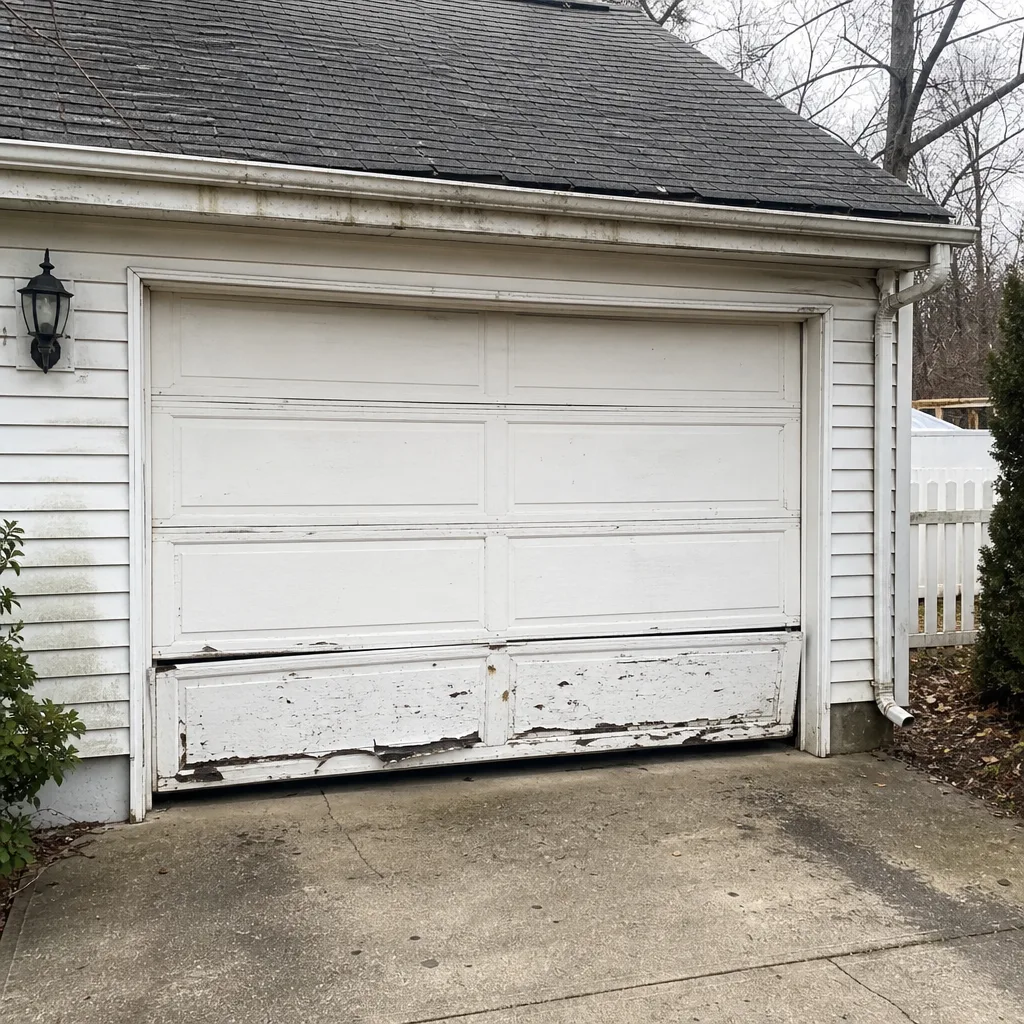 Before
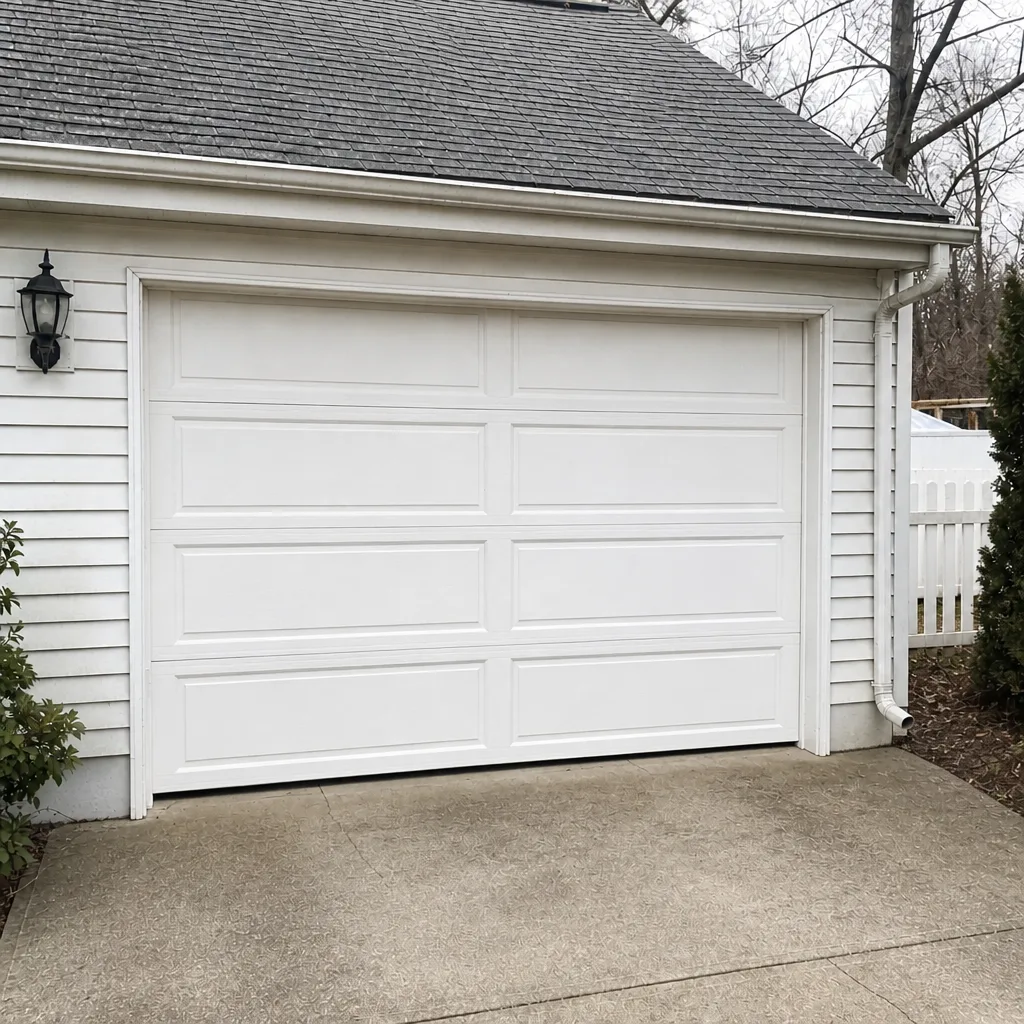 After
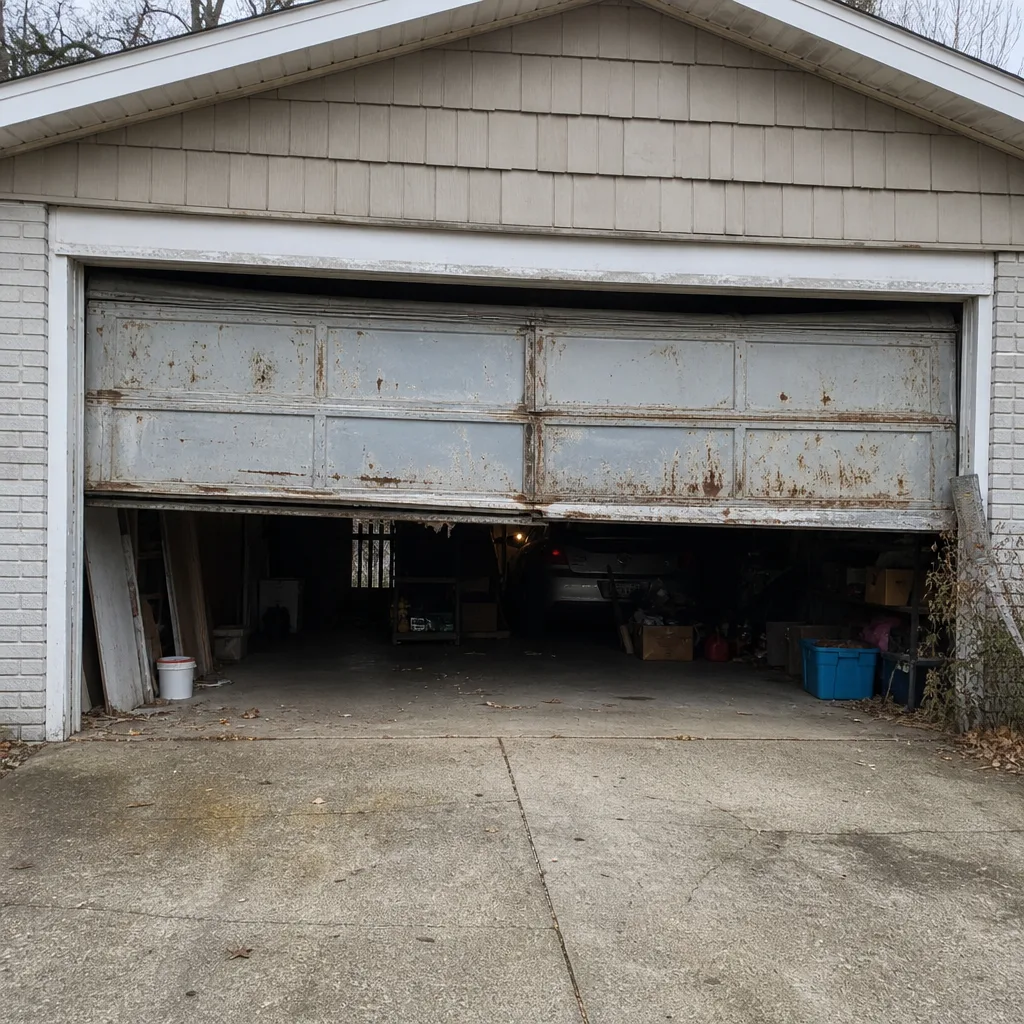 Before
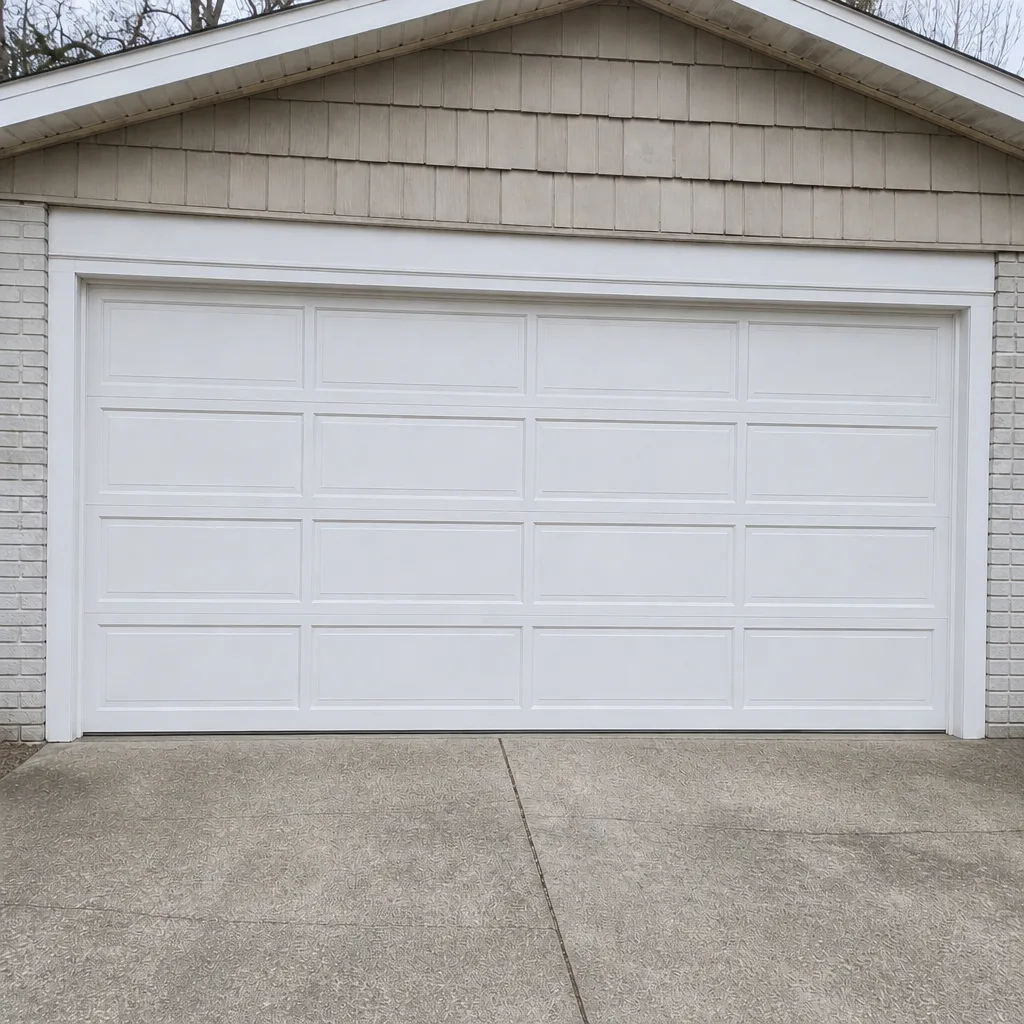 After
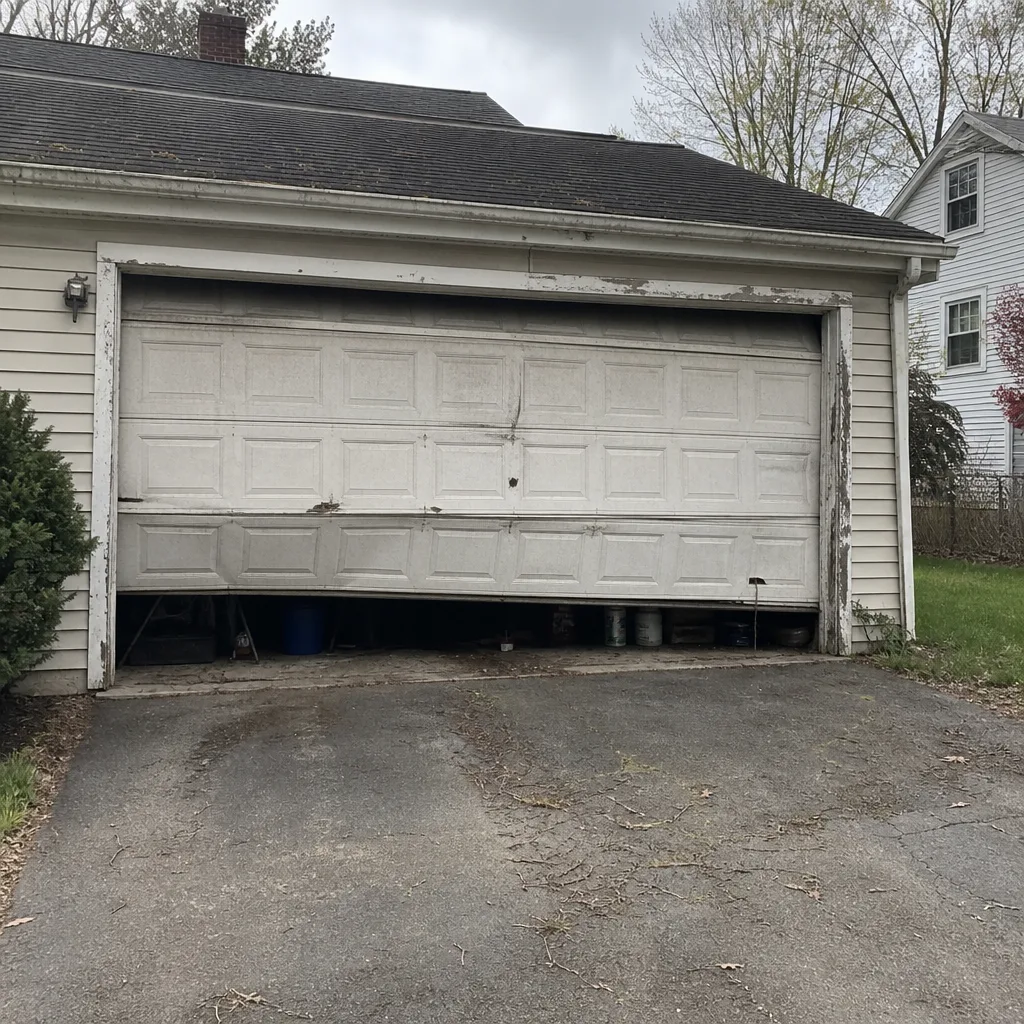 Before
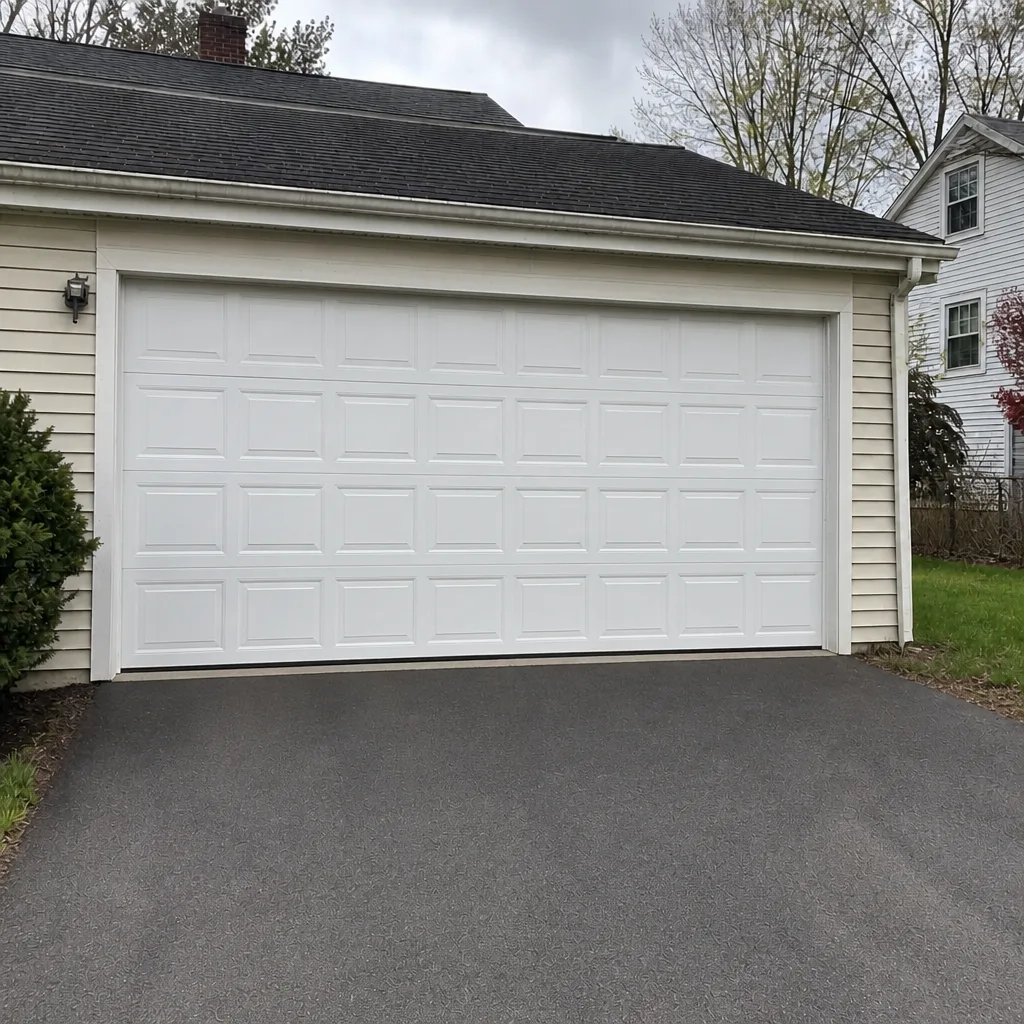 After
When to Call a Professional
Call a professional when you hear a pop, when the door won’t reverse, when the door feels heavy, or when you see a frayed cable. Those four are the clear stop-and-call signs. Also call when you’ve adjusted the limit switch or the sensors and the door still behaves unpredictably, or when the same symptom keeps coming back after a reset. And call if you’re simply not sure whether a noise is serious. Diagnosing a garage door from a description is something a specialist does quickly, and it’s far cheaper than letting a small failure become an emergency. Plainfield Garage Door Repair Co offers free estimates in Plainfield – call (855) 707-0472. We’re open Sunday through Friday, 7am to 7pm, and closed Saturday.
Frequently Asked Questions
The earliest warning signs are a slower or noisier lift, grinding or squealing on every cycle, and an uneven gap when the door is closed. These usually point to worn rollers, a dry or misaligned track, or a spring losing tension. Catch them early and the repair is usually small; ignore them and the opener starts absorbing the strain. Call for a free inspection if you notice any of these in Plainfield.
A broken spring usually announces itself with a loud pop, and afterward the door won’t lift or feels extremely heavy by hand. You may also see a visible gap in the coil. Do not try to lift the door or replace the spring yourself; it’s under extreme tension and is the most dangerous part of the system. Stop using the door and call (855) 707-0472 for spring repair.
No. If the door doesn’t reverse when it meets an object, do not use it until it’s repaired. A door that presses down and keeps going can injure a person or animal and damage a vehicle. The cause is usually a limit switch or sensor issue, and it needs a garage door specialist to fix and recalibrate safely. Call us and we’ll schedule a repair.
Test it once a month, and any time you notice the door behaving differently. It takes about ten seconds using a roll of paper towels or a piece of wood, and it’s the best way to catch a failing safety system before something goes wrong. If it fails, stop using the door and call for service.
If the door lifts normally by hand but won’t move with the opener, the problem is almost always in the opener itself: a dead motor, stripped gear, logic board, or misaligned safety sensor. If the door feels heavy by hand too, the springs are likely failing and the opener is straining. Either way, a diagnosis from a garage door specialist will tell you which system to repair.
No. We’re closed Saturday and open Sunday through Friday, 7am to 7pm. If your door fails on a Saturday, call and we’ll book you for Sunday. For urgent situations like a broken spring or a door that won’t close, call (855) 707-0472 and we’ll get you scheduled as soon as we’re open.
The Bottom Line
Garage door warning signs are a chain, not a checklist. A slow door is an opener fighting resistance. Grinding is friction wearing parts. A pop is a spring letting go. Learn the sound, the gap pattern, and the 10-second reversal test, and you’ll know which symptoms you can schedule and which mean stop using the door today. In Plainfield’s swing between humid summers and freezing winters, a quick seasonal check catches most problems early. When something doesn’t sound right, a specialist can tell you in minutes what’s failing and whether it’s urgent. That’s the difference between an informed decision and a stranded car.
Call (855) 707-0472 for a free estimate. We’re open Sunday through Friday, 7am to 7pm, and closed Saturday. Garage doors are all we do.
Written by the team at Plainfield Garage Door Repair Co.