Top Signs You Need Garage Door Service – Don’t Ignore These
A garage door doesn’t snap a cable without warning. It tells you first, usually through a sound, a stutter, or a visual cue that most homeowners write off as normal wear. The signs of a failing garage door are quiet: a slightly slower open cycle, a grinding note that wasn’t there six months ago, a gap of daylight under one corner. Learning to read those signals is the difference between a small repair and a stranded car. If you’d rather not climb the ladder yourself, call (855) 707-0472 and we’ll take a look.
Why Garage Door Problems Rarely Announce Themselves
Garage doors fail gradually, not instantly. The springs, cables, rollers, and opener all wear down over thousands of cycles, and the decline is slow enough that your brain filters it out. You get used to the door sounding a little heavier. You stop noticing that it takes an extra second to close. That’s the trap: by the time a door fails outright, the warning signs have usually been there for weeks.
In our experience around Plainfield, the door that finally gives out is almost always one the homeowner describes as “a little off for a while.” The most common early warnings fall into three buckets:
- Sound: grinding, scraping, squealing, or a loud bang.
- Behavior: slowing down, reversing, stopping short, or refusing to move.
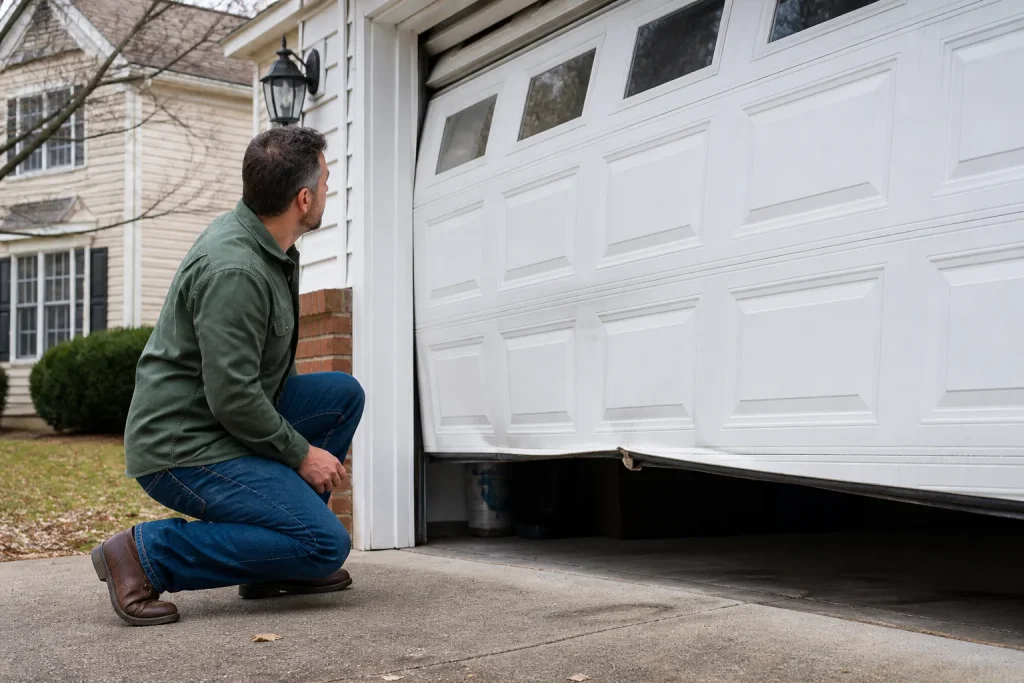
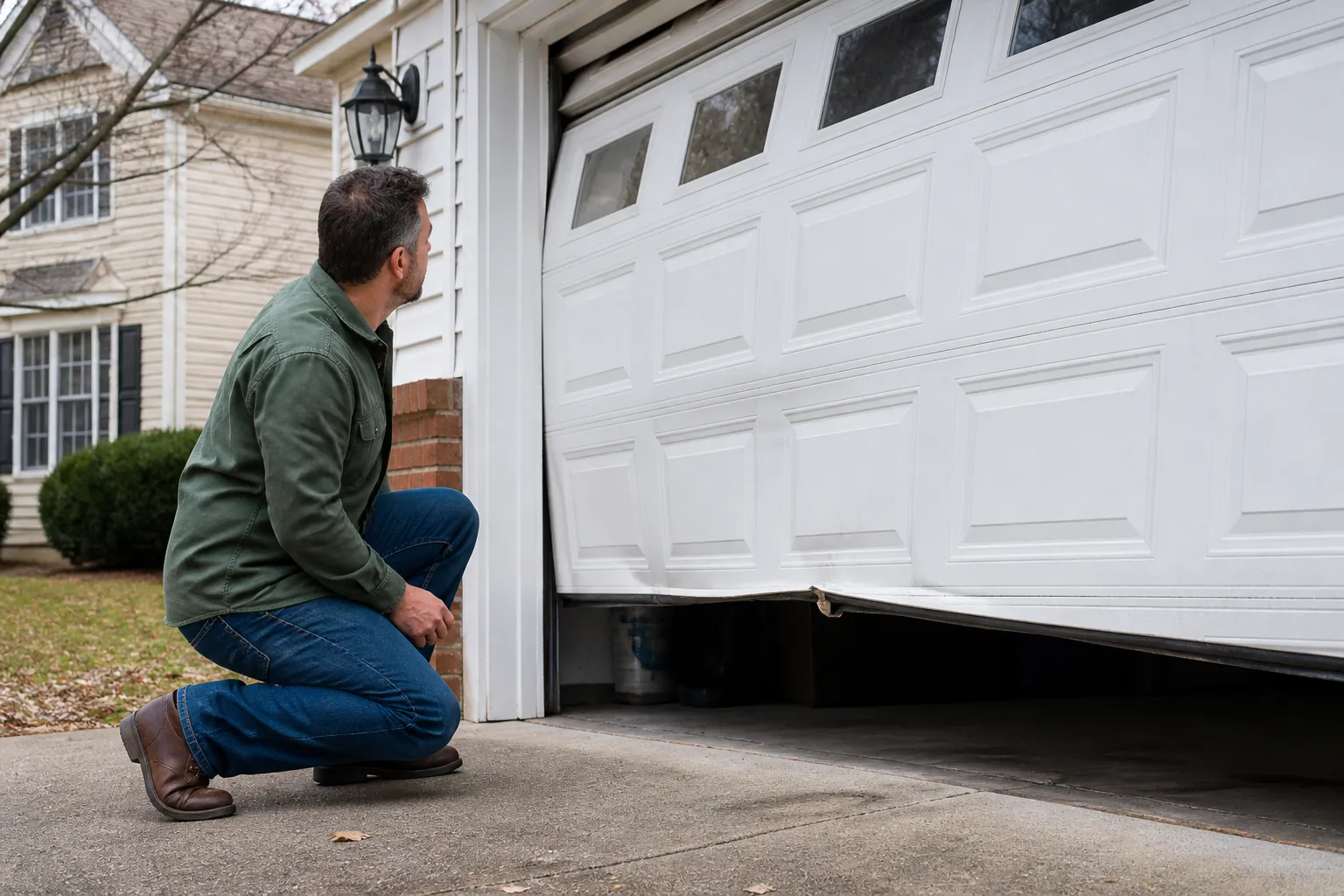
- Visual: bent tracks, worn rollers, frayed cables, or a door sitting crooked.
One sign on its own is worth a look. Two or more together mean you should stop using the door and get it checked, because a worn part under load can fail completely and turn a modest fix into an emergency.
We work on every major brand, including Genie, Clopay, Amarr, and Wayne Dalton, so we know how each system tends to fail. That matters, because a Genie opener’s warning signs look different from a Clopay door’s.
The Difference Between “Slow” and “Failing” (And Why It Matters)
A slow garage door has two common causes, and they’re not equally urgent. If the door drags because the track is dirty or a roller is stiff, you have time. If the door is slow because a spring is losing tension, you may be weeks from a snap, and a snapped spring can drop the door or send a cable whipping. One is housekeeping; the other is a countdown.
Here’s how to tell them apart:
- Dirty track: the door hesitates in a specific spot, often where debris or a bent roller catches. It may improve if you clear the track.
- Losing spring tension: the door feels progressively heavier to lift by hand, and the opener strains the whole way up, not just at one point. The door may also open slowly but close at normal speed, or the reverse.
Springs are the most dangerous part of any garage door. They store enormous energy, and a trained technician handles them with the right tools and the door secured. We treat garage door spring repair as its own safety-critical job rather than lumping it into general repairs, because that’s what it deserves. If your door is heavy and getting heavier, don’t run it to “see if it holds.”
Grinding, Scraping, or Banging: What Each Sound Tells You
Most articles lump every garage door noise together. The repair for a grinding opener and the repair for a scraping track are completely different, so it pays to know which sound is which. Here’s a quick map of what each noise usually means:
- Grinding from the opener (up high, near the motor): worn gears, a failing drive, or a stripped sprocket. The opener itself needs attention.
- Scraping along the track: a bent track or a roller that’s come loose or worn flat. The door is catching on metal.
- Squealing or chirping: dry hinges or rollers. Often the easiest fix on this list, and a good reason to get ahead of the problem.
- A loud bang from inside the garage: often a spring letting go. Stop using the door and call a pro.
A grinding opener and a scraping track sound similar from the kitchen, but they need different parts and different tools. When a noise comes from the motor, the fix is opener work. We do garage door opener repair across legacy and smart-connected systems, so we can diagnose the actual unit instead of guessing. When the noise comes from the track, the fix is mechanical. Sorting that out fast in a Plainfield garage saves you from replacing the wrong part. Garage doors are all we do, and it shows in how quickly we can tell the two apart.
A Door That Reverses Is Not Always a Sensor Problem
A garage door that reverses unexpectedly is often blamed on the safety sensors, and sometimes that’s right. But there are three other causes technicians check first, and any of them is more serious than a misaligned sensor. The most commonly missed culprits:
- Misadjusted travel limits: the opener thinks it has hit the floor or ceiling early, so it reverses. This is an opener setting that drifts over time.
- Binding door: a worn roller, bent track, or failing spring makes the door so tight the opener reads it as an obstruction and backs off.
- Failing springs: when a spring loses tension, the opener forces the door up, then meets heavy resistance on the way down and reverses to avoid a crash.
Sensors get the blame because they’re the easiest thing to point at, and they’re worth checking. But if your door reverses repeatedly and the sensor lenses are clean and aligned, the problem is likely mechanical, and running the door anyway wears down the opener. That’s a good moment to stop and call. A quick diagnostic in Plainfield tells you which of the four causes you’re dealing with before the opener gives out.
The Five-Minute Visual Check (Twice a Year)
Twice a year, walk out to the garage door and spend five minutes looking at these points. Catches most problems before they become emergencies:
- Springs: look for a gap or a break in the coil above the door.
- Cables: check for fraying, slack, or a cable off its drum.
- Rollers: look for flat spots, cracks, or rollers popped out of the track.
- Track: check that both sides are straight and the gap is even top to bottom.
- Hinges: look for rust or separation.
- Door panels: look for a crooked door, which usually points to a cable or spring issue.
If you see anything that looks off, write it down rather than testing it by hand. A visual check is safe. Spring and cable work is not, and one slip with a cable under tension is the reason we handle garage door repair with the door secured and the tension released safely.
How to Test Door Balance in Under a Minute
Door balance tells you whether the springs are doing their job. To test it: close the door, pull the manual release to disconnect the opener, and lift the door to about halfway. Let go. A balanced door stays put. A door that sinks under its own weight means the springs are losing tension and the opener is carrying a load it wasn’t built for.
While you’re there, lift it fully and lower it again a couple of times. It should move smoothly. If it feels heavy, jerky, or hard to hold, stop and get it checked. Don’t run the opener again until it’s been looked at. Reconnect the release when you’re done, and never leave the door disconnected for the opener.
This is also the test to run before a spring repair is booked. A door that sinks tells the tech the springs are the likely culprit before anything gets opened up.
When to Call a Pro (And When to Wait)
Some garage door issues are safe to handle yourself, and some absolutely aren’t. Here’s the line:
- You can wait and watch: a squeak, a slightly noisy roller, or a track with a little debris.
- Call soon: a grinding opener, a reversing door, or a visual warning from the checklist above.
- Stop using the door and call now: a snapped spring, a frayed or slack cable, a door hanging crooked, or a loud bang.
Emergency service is a core part of what we do, not an add-on. If your door won’t move and your car is trapped, we connect you with a local pro who can get out to you. And if the problem can wait until a scheduled visit, we’ll say so.
Related services in Plainfield: our Plainfield Garage Door Repair Co team handles repair, opener work, spring repair, installation, and emergency calls.
Don’t Ignore These Signs
The repair you skip now tends to be the emergency you pay for later, and it usually costs more than the small fix would have. The signs above are the door’s way of telling you what’s coming. Learn to read them, run the five-minute check twice a year, and test the balance in under a minute. If something feels off, call us. Our technicians have up to 8 years of experience, and we work on the brand you actually own.
If you’re in Plainfield and need help, Plainfield Garage Door Repair Co offers free estimates. Call (855) 707-0472 and we’ll get you booked.
Frequently Asked Questions
You know it needs repair when you see one or more warning signs: a noisy opener, a slow or jerky cycle, a door that reverses on its own, a crooked panel, a frayed cable, or a spring with a visible gap. Two or more together mean stop using the door and call a pro. For a free estimate in Plainfield, call (855) 707-0472.
A grinding door is not always an emergency, but it’s a warning you shouldn’t ignore. Grinding from the opener usually points to a worn gear or failing drive; scraping means the track or a roller is the problem. Either way early repair is cheaper than running it to failure. Call (855) 707-0472 if you’re unsure.
No. Springs store serious energy and a snapped spring, or a slip during replacement, can cause severe injury. We handle spring work as a dedicated, safety-critical service with the door secured and the tension released safely. If your door is heavy or you see a broken spring, stop using the door and call (855) 707-0472.
That depends on your policy and the cause of the damage, so check with your insurer. Routine wear like a worn spring, a tired opener, or a stiff roller is usually not covered, while damage from a specific event may be. For an honest assessment of what’s wrong, call us for a free estimate at (855) 707-0472.
Written by the team at Plainfield Garage Door Repair Co.
Need Garage Door Help?
Call Plainfield Garage Door Repair Co - the local pro we connect you with is licensed and insured, here with fast after-hours help in Plainfield.
(855) 707-0472